Edited volume

Academic Recovery

Supporting Students on Academic Probation

As many as a quarter of all undergraduates will find themselves on academic probation at some point. Being placed there is not a label. It is a transition, and students move through it carrying shame and isolation that most institutional responses make worse.

This volume gathers practitioners and researchers around a different premise: that probation is a developmental moment an institution can be designed for. Contributors cover what the research actually says about probationary students, how early alert and intervention fit together, and how to build recovery programming that holds up across an advising operation.
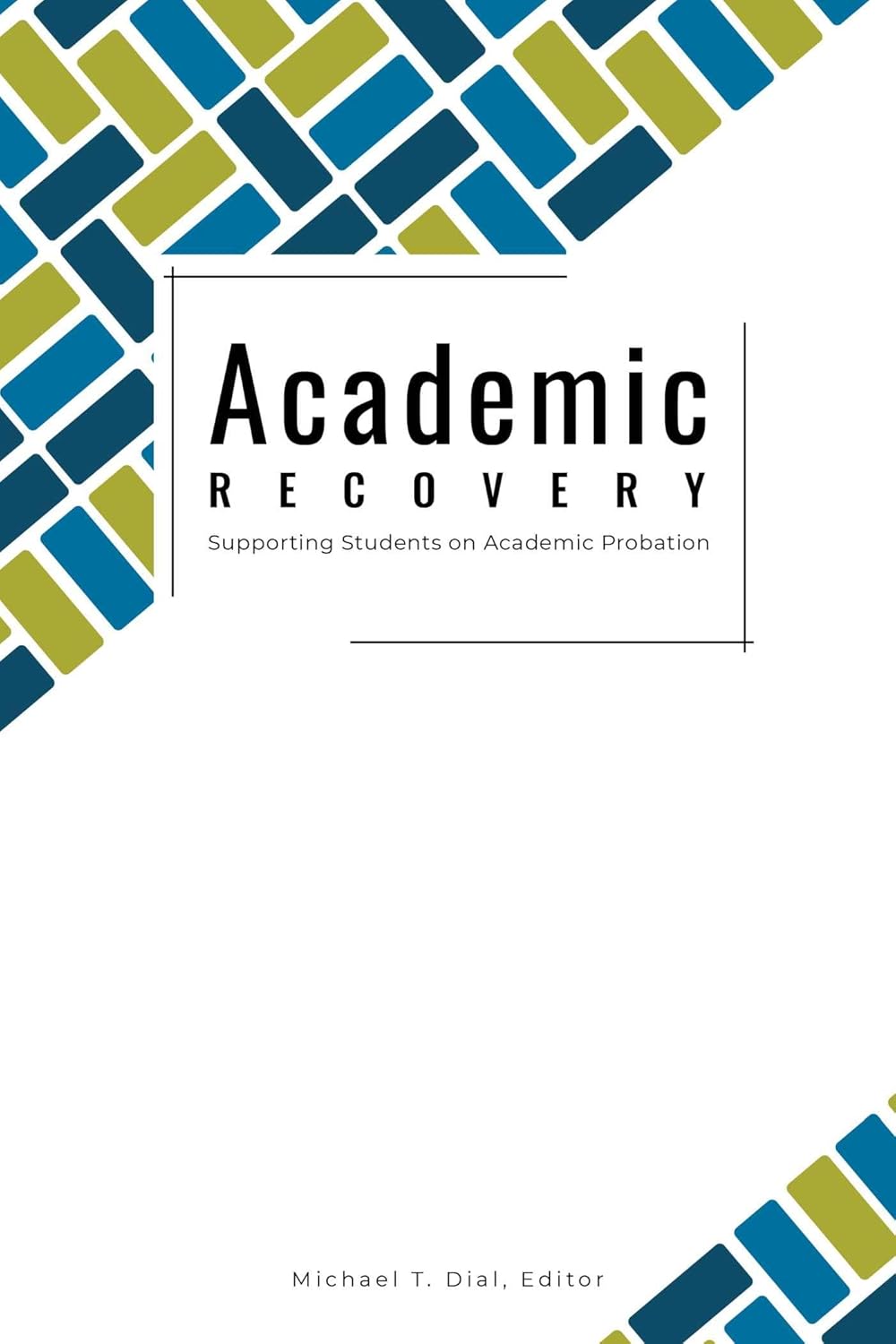

Cover of Academic Recovery: Supporting Students on Academic Probation

What the book argues

Four ideas the volume is built on.

01

Probation is a life transition

Read through Schlossberg's 4S model, situation, self, support, and strategies, probation looks less like an academic status and more like a disruption students have to be helped across.

02

Recovery is behavior change, not information

The transtheoretical model of behavior change explains why a mandatory workshop rarely moves a student who has not decided anything yet. Readiness comes in stages, and programming has to meet it.

03

Shame is the obstacle

Probationary students report isolation and a sense that they are the only one. Normalizing academic struggle and rebuilding self-efficacy are prerequisites for anything else an institution wants them to do.

04

Programs have to connect

Early alert, advising, the first-year seminar, and policies like grade forgiveness are usually run by different offices. The book treats their integration as the design problem it is.

Who it is for

Written for the people who meet with students on probation, and for the people who set the policy behind it.

Academic advisors and advising administrators

The primary intervention agents, and the people who design their caseloads.

First-year seminar and student transition staff

Including anyone considering a recovery section of an existing seminar.

Retention and student success leadership

Early alert owners, deans of students, and directors of student success centers.

Faculty and committees who set academic standards

The probation policy is a design decision, and it can be made differently.

Praise

What readers said

Academic Recovery: Supporting Students on Academic Probation is an invaluable tool for institutional leaders, policy makers, academic advisors, faculty members, and anyone else charged with supporting students on academic probation. Through the inclusion of established theoretical approaches, well-described practical strategies, and engaging case-studies this book provides a blueprint for fulfilling the ethical responsibility that my colleagues and I have to support students as they navigate this often-overlooked yet critical transition.

Bryce BuntingAssistant Dean, Undergraduate Education, Brigham Young University

Student success does not always encompass clear pathways and perfect stories as most students encounter life challenges and barriers to access on their journeys to graduation. Probationary students are the underdogs and should not be written off. From unpacking the "shock, shame, and inadequacy" to taking a deeper look at our policies to uncover equity gaps, this text explores a diverse list of effective socioemotional and academic support practices to help students cross the finish line despite their circumstances, experiences, and identities.

James K. WinfieldAssociate Dean for FYE, General Education, and Retention Strategies, Southern New Hampshire University

This book provides an excellent and much-needed resource for administrators, practitioners, and anyone who is interested in promoting the success of college students who are placed on academic probation. It nicely draws upon relevant research and theory to provide in-depth practical recommendations and guidance, and it offers a broad reframing of professional efforts to help students move out of academic difficulty toward a path to degree completion.

Nicholas A. BowmanMary Louise Petersen Chair in Higher Education, University of Iowa

This work demands that we evaluate our philosophies, policies, and practices to help all our students succeed.

Inside the volume

Table of contents

Seven chapters and two campus case studies, from what the research says through policy, coaching, seminars, assessment, and integration.

Foreword
Jennifer R. Keup
Introduction
What We Know About Students on Probation and Supporting Them
Michael T. Dial
Chapter 1
Institutional Policies on Probation, Dismissal, and Reinstatement
Caleb Morris & Andrea Harris
Chapter 2
Theory and Practice for Academic Recovery
Catherine Nutter
Chapter 3
Academic Coaching and Supporting Students on Academic Probation
Claire Robinson
Chapter 4
Early Alert and Academic Intervention
Michael T. Dial & Paige McKeown
Chapter 5
First-Year Seminars for Students on Academic Probation
Dan Friedman, Stephanie M. Foote, & Dottie Weigel
Chapter 6
Assessing Student Probation and Academic Recovery Initiatives
Dallin George Young & Dottie Weigel
Case Study 1
Cabrini University: Augmenting Academic Recovery Practices to Amplify First-Year Student Success
Richie Gebauer, Shana DeRosa, Julie Carney-Jones, & Kimberly L. Boyd
Case Study 2
University of South Carolina: UNIV 101 Academic Recovery
Mikaela Rae
Chapter 7
Intentionality and Integration Within Academic Probation Policies and Programs
Richie Gebauer & Michael T. Dial
Mike T. Dial

About the editor

Mike T. Dial works in advising and student success at the University of South Carolina, where he has spent twelve years across early intervention, peer leadership, undergraduate advising, and advising technology. He piloted an academic recovery section of the university's first-year seminar for students on probation.

He also co-edited Academic Advising Administration: Essential Knowledge and Skills for the 21st Century, 2nd edition, for Routledge, and writes on governance and digital literacy in student success.

Publication details

PublisherNational Resource Center, University of South Carolina
PublishedOctober 2022
Extent205 pages, 6″ × 9″
Paperback978-1-942072-59-1 · $30
E-book978-1-942072-60-7 · $30
Library e-book978-1-942072-61-4 · $125

Get the book

Paperback and e-book, $30 each. Published by the National Resource Center for The First-Year Experience and Students in Transition at the University of South Carolina.